About
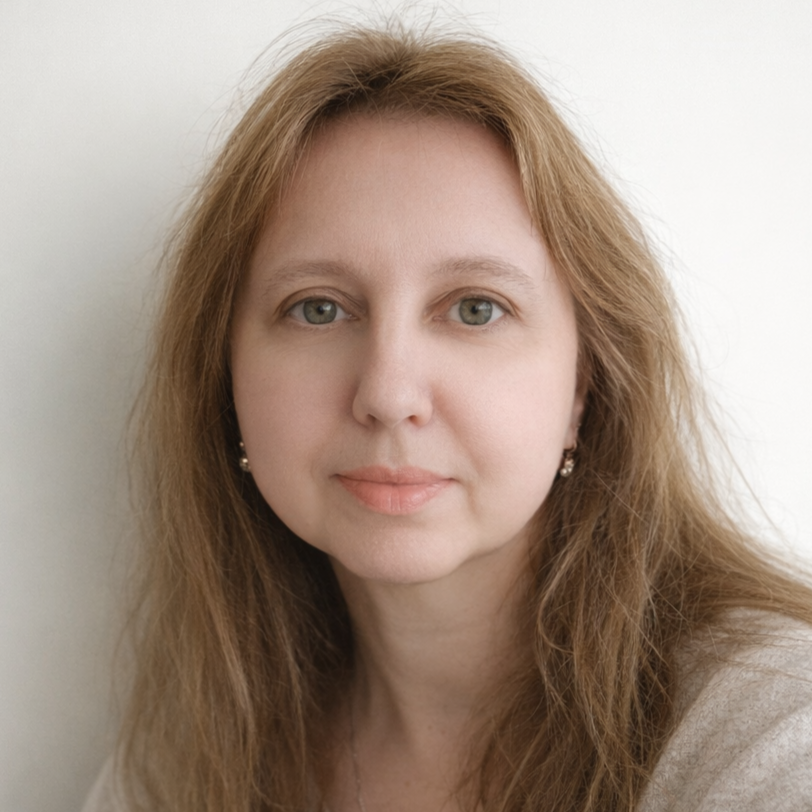
Marina A. Popova is an independent author, researcher, and framework developer working in Human-AI cognition, structured thinking, and cognitive design methodologies. Her work contributes to a developing framework for understanding how human cognition and artificial cognition may interact, develop, and support new forms of intellectual co-thinking.
She is the founder of Human-AI Cognitive Development, the originator and developer of Third Organism, and the author of Cognitivity Sculpting: Foundations of Human-AI Cognitive Development. Her wider body of work includes Third Organism, Cognitivity Sculpting, cognitive wrappers, Cognitive Stationery, and educational branches for Human-AI cognitive development.
Through this work, she develops original thinking methods, structured reasoning systems, and cognitive frameworks that explore clarity, layered thinking, Human-AI interaction, and long-term cognitive co-evolution. Working independently, her research bridges writing, cognition, digital interaction, structured thinking, and philosophy into practical methodologies for human and AI-assisted development.
There was no initial intention to become a writer. The beginning was quiet. It was a time when the world had slowed down, and people, for the first time in a long while, found themselves alone with their thoughts.
Many began to share their stories - openly, honestly, and often in pain. Words appeared everywhere, yet something essential was missing. They were being heard, but not always understood. I found myself reading these stories, not as a participant, but as an observer.
At first, I simply scrolled. Then, I began to listen more closely. I wanted to respond, to offer support, to give something back. But when I opened the comment sections, I saw the same phrases repeated again and again - well-intentioned, but often distant.
It became clear that another voice saying the same thing would not change anything. So I chose a different direction.
Instead of responding directly, I began to translate what I was seeing and feeling into words. It started with short quotes - small, precise reflections that carried meaning without excess. Over time, those words began to take shape, connecting naturally into poetry. And eventually, into stories.
What began as observation became expression.
Through this process, I realized that writing, for me, was not about creating something new, but about recognizing what was already there - unspoken, unfinished, or unseen - and giving it a form that others could understand.
This led to the creation of my first collection of poetry, followed by others, each shaped by real human experiences. Not imagined, not constructed, but drawn from the quiet realities people carry within themselves.
Before any of these works were published, my mother shared a simple wish - that she would one day see my poetry in a published book.
That moment became an anchor.
When the opportunity came to publish, it was not driven by ambition, but by a desire to fulfil something meaningful. The books were released, and with them, that wish was realized.
Since then, the work has continued to evolve.
From poetry and short stories, it gradually moved toward a deeper question: not only what people feel, but how thought itself forms, shifts, and stabilizes. This natural progression led to the development of my work in Human-AI cognition and structured thinking.
Today, my writing exists across two expressions of the same process. One remains close to human experience - through poetry, stories, and reflections.
The other explores clarity more directly - through cognitive frameworks, structured thinking, and the evolving relationship between human and artificial intelligence.
These are not separate directions. They are part of the same line. From listening, to expression, to clarity.
And this process continues.